
Rental Property Maintenance Cost Categories Explained

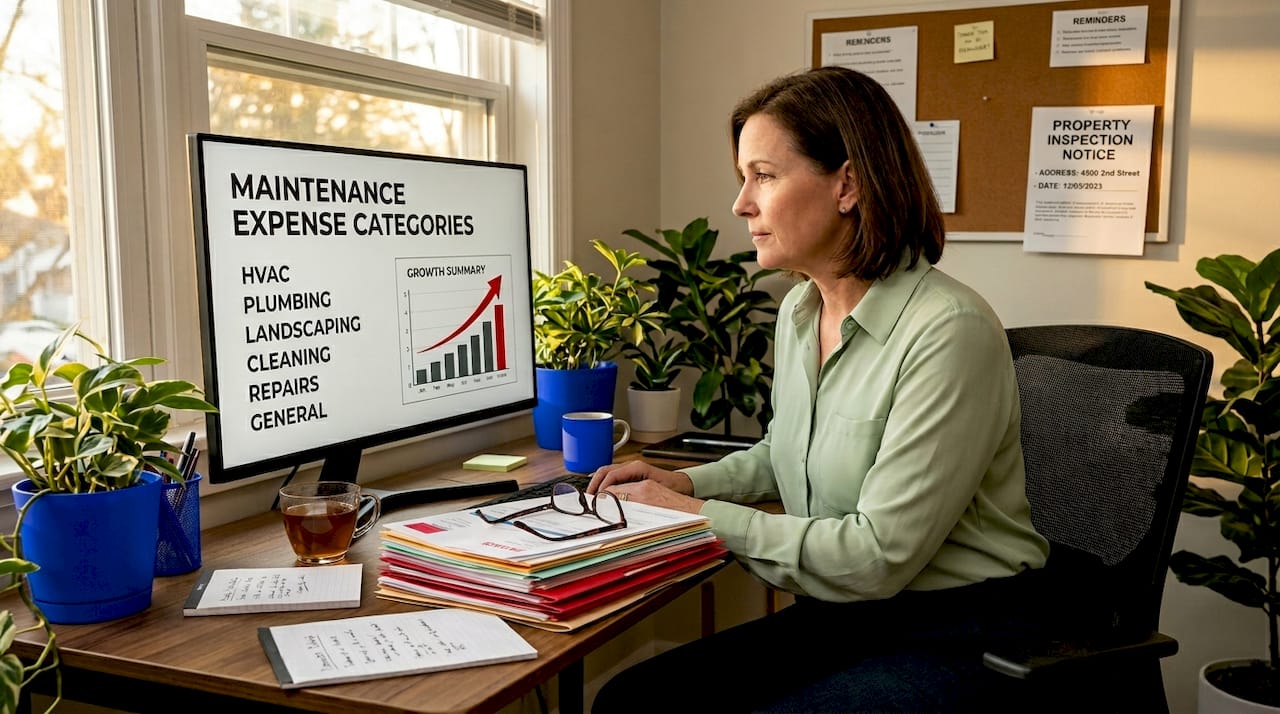
Most landlords can name their mortgage payment and insurance premium without hesitation. Ask them to break down their maintenance expenses breakdown by category, and you get silence. That gap is where budgets fall apart. Understanding rental property maintenance cost categories is not optional if you want to protect your cash flow and make decisions like an investor. This article walks you through every major category, what drives costs in each, and how to build a property upkeep budget that actually holds up when something goes wrong.
Table of Contents
Key takeaways
Point | Details |
Fixed costs are your baseline | Property taxes, insurance, and HOA fees are predictable. Budget them annually and track them for tax purposes. |
Operating expenses vary with occupancy | Routine repairs, utilities, and management fees fluctuate. Plan for variability, not just averages. |
CapEx requires a dedicated reserve | Major system replacements cost thousands. Set aside funds monthly so you are never caught off guard. |
Emergency repairs escalate fast | A $500 repair can become $5,000 if ignored. An emergency fund is not optional. |
Preventive maintenance pays for itself | Scheduled inspections every 6 to 12 months reduce costly surprises and extend property life. |
1. Understanding rental property maintenance cost categories
Before you can build a reliable property upkeep budget, you need a clear mental model of how costs are organized. Most landlords lump everything together under “maintenance,” which is like tracking your finances with one bank account for everything. It works until it doesn’t.
The core framework breaks down into four major buckets: fixed expenses, operating expenses, capital expenditures, and emergency repairs. Preventive maintenance and inspections sit across all of them as a cost-reduction strategy. Separating ownership costs from operational costs is what prevents the budgeting gaps that catch landlords off guard.
A common starting benchmark is to budget 1% to 4% of property value annually for total maintenance expenses. A $300,000 property means $3,000 to $12,000 per year. That range is wide because it depends heavily on property age, condition, and location. The categories below will help you allocate within that range with more precision.
2. Fixed expenses: predictable recurring costs
Fixed expenses are the costs you can plan for with near certainty. They do not change based on how many repairs you had this month or whether your tenant called three times about the faucet. They are the foundation of your annual budget.
The main fixed costs for most landlords include:
Property taxes: Typically billed annually or semi-annually. Rates vary by municipality but commonly run 1% to 2% of assessed value per year.
Landlord insurance: Covers the structure, liability, and loss of rental income. Average premiums run $1,000 to $2,500 per year for a single-family home, depending on coverage and location.
HOA fees: If your property sits in a managed community, these can range from $100 to $700 per month and often cover exterior maintenance, landscaping, and shared amenities.
Mortgage principal and interest: Not technically a maintenance cost, but a fixed ownership cost that belongs in your full cash flow model.
These costs matter beyond just cash flow. Properly categorizing costs aids tax reporting and improves financial management, so keeping fixed expenses clearly labeled in your books is worth the discipline.
Pro Tip: Review your property tax assessment annually. Municipalities reassess values, and many landlords miss opportunities to appeal inflated assessments that quietly erode their returns.
3. Operating expenses: ongoing variable costs
Operating expenses are where most landlords lose track. These are the costs that show up regularly but vary in amount from month to month. They include routine maintenance labor, repair parts, utilities you cover, and property management fees.
The variability is the challenge. A month with no repairs looks very different from a month when the HVAC needs a service call and the garbage disposal dies. Some factors that drive operating cost variability include:
Property age: Maintenance costs increase non-linearly as equipment wears down. A 20-year-old property will cost significantly more to maintain than a 5-year-old one, and the increase is not proportional.
Tenant behavior: Tenants who report issues early save you money. Tenants who let problems sit create larger, more expensive repairs.
Property management fees: If you use a management company, expect fees of 8% to 12% of monthly rent. That is a real operating cost that belongs in your expenses breakdown.
Utilities: If you cover water, trash, or gas for multi-unit properties, these are operating costs that fluctuate with usage and rate changes.
One distinction worth making: routine maintenance is planned and recurring, like HVAC filter changes or gutter cleaning. Emergency repairs are unplanned. Both are operating costs, but they should be tracked separately so you can see which one is eating your budget.
Pro Tip: Maintenance downtime causes lost rental income when units sit vacant during repairs. Coordinate repairs efficiently and set clear timelines with vendors to minimize vacancy days.
4. Capital expenditures (CapEx): major system replacements
Capital expenditures are the big-ticket items that do not happen every year but will absolutely happen eventually. Roof replacement. HVAC system overhaul. New water heater. Full flooring replacement. These are not repairs. They are investments that extend the useful life of the property.
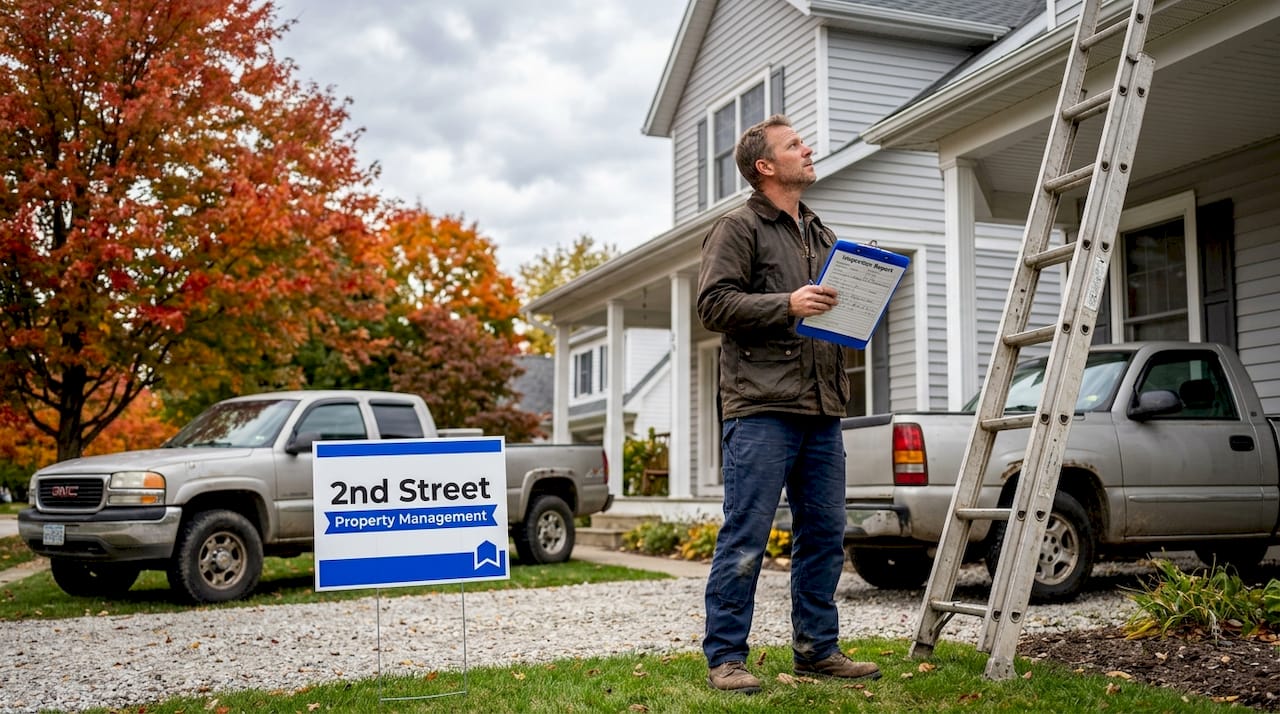
The IRS draws a clear line here. Repairs are immediately deductible while improvements must be depreciated over several years. That distinction affects your taxes and your bookkeeping, so getting it right matters.
Here is a comparison of common CapEx items with approximate costs and typical replacement timelines:
Item | Average cost | Typical lifespan |
Roof replacement | $8,000 to $20,000 | 20 to 30 years |
HVAC system | $5,000 to $12,000 | 15 to 20 years |
Water heater | $800 to $2,500 | 8 to 12 years |
Flooring (full replacement) | $3,000 to $10,000 | 10 to 20 years |
Electrical panel upgrade | $2,000 to $6,000 | 30 to 40 years |
The smart approach is to build a CapEx reserve fund. Divide the replacement cost by the remaining useful life of each system and set that amount aside monthly. For a $10,000 roof with 10 years left, that is roughly $83 per month. Smart landlords use property condition assessments to forecast these expenditures and plan reserves with real data rather than guesswork.
Pro Tip: When you acquire a new property, get a detailed inspection report that documents the age and condition of every major system. This becomes your CapEx forecast and protects you from buying into a property where three major systems are due for replacement within two years.
5. Emergency and unexpected repairs: the costs that hurt most
Emergency repairs are the category that separates prepared landlords from reactive ones. A burst pipe at 11 PM on a Friday. A water heater that fails in January. Storm damage to the roof. These events do not wait for a convenient time, and they rarely come alone.
The most important thing to understand about emergency repairs is how fast they escalate. A small repair left unaddressed can turn a $500 fix into a $5,000 restoration project once secondary damage sets in. Water damage is the classic example. A slow leak ignored for weeks becomes mold remediation, drywall replacement, and flooring work.
Common emergency repair scenarios include:
Burst or frozen pipes
Water heater failure
HVAC failure during extreme weather
Roof damage from storms
Electrical failures or outages
Sewage backups
The financial protection strategy has three layers. First, carry landlord insurance with strong coverage for sudden and accidental damage. Second, maintain warranties on newer systems so you are not paying full replacement cost out of pocket. Third, keep a dedicated emergency fund of at least $5,000 to $10,000 per property so you can act immediately without waiting on financing.
Pro Tip: Build relationships with licensed plumbers, electricians, and HVAC technicians before you need them. Landlords who call vendors cold during an emergency pay premium rates and wait longer. Vendors who know you will prioritize your calls.
6. Inspection and preventive maintenance: your best cost-reduction tool
Preventive maintenance is not a cost category in the traditional sense. It is a strategy that reduces costs across every other category. The landlords who spend the least on emergency repairs are almost always the ones who inspect the most consistently.
Regular property inspections every 6 to 12 months are the most effective way to catch issues before they become expensive. A small roof leak found during an annual inspection costs a few hundred dollars to patch. The same leak discovered six months later after it has damaged the attic insulation and ceiling drywall costs several thousand.
Here is a practical preventive maintenance schedule by season:
Spring: Inspect roof and gutters after winter. Check HVAC for cooling season. Look for foundation cracks or moisture intrusion.
Summer: Check exterior paint, caulking, and window seals. Inspect irrigation systems if applicable.
Fall: Service the heating system before cold weather. Clean gutters. Check weatherstripping on doors and windows.
Winter: Monitor for ice dams in cold climates. Check pipe insulation. Confirm smoke and carbon monoxide detectors work.
Dividing maintenance tasks by season keeps you organized and prevents the kind of deferred maintenance that turns into expensive catch-up work. It also gives you documented maintenance history, which matters more than most landlords realize. Undocumented maintenance history can lead to higher insurance premiums and lost property value when you go to sell.
Pro Tip: Use a simple spreadsheet or property management software to log every inspection, repair, and vendor contact. This record becomes a financial asset when refinancing, selling, or disputing insurance claims.
My honest take on budgeting for maintenance costs
I’ve seen landlords build beautiful spreadsheets with precise rent projections and then budget $50 a month for maintenance on a 1980s property. That is not a plan. It is wishful thinking dressed up as a plan.
The mistake I see most often is treating maintenance as a single line item. When everything is lumped together, you cannot tell whether you are overspending on routine repairs or underfunding your CapEx reserve. You confuse movement with progress. Categorizing costs properly, as described above, is what gives you real visibility into where your money is going and where the risk is building.
What I’ve learned is that the hidden costs of rental property are almost always in the categories landlords did not plan for. Not the ones they forgot existed, but the ones they knew about and chose to underestimate. CapEx reserves feel unnecessary until the roof needs replacing. Emergency funds feel excessive until the pipes burst.
The landlords who sleep well are not the ones with the newest properties. They are the ones with the most disciplined systems. Inspect regularly. Fund reserves monthly. Track every cost by category. That discipline compounds over time and turns a stressful portfolio into a predictable one.
— Main
Let 2ndstreetpropertymanagement handle the complexity
Managing rental property maintenance cost categories on your own takes time, systems, and experience that most landlords build the hard way. 2ndstreetpropertymanagement was built by investors for investors, which means the team understands exactly what it costs to maintain a rental property and how to plan for it.
From coordinating vendors to tracking expenses by category and managing CapEx reserves, 2ndstreetpropertymanagement gives you the structure to protect your cash flow without spending your weekends chasing repair quotes. If you want to understand how professional property management works and whether it fits your portfolio, the team at 2ndstreetpropertymanagement is ready to walk you through it.
FAQ
What are the main rental property maintenance cost categories?
The main categories are fixed expenses (taxes, insurance, HOA), operating expenses (routine repairs, utilities, management fees), capital expenditures (major system replacements), and emergency repairs. Preventive maintenance and inspections reduce costs across all of them.
How much should I budget for rental property maintenance?
A common benchmark is 1% to 4% of property value per year, or roughly 1.5% of monthly rent as a monthly estimate. Older properties and those with aging systems should budget toward the higher end of that range.
What is the difference between a repair and a capital expenditure?
Repairs restore a property to working condition and are generally tax-deductible immediately. Capital expenditures improve or extend the life of the property and must be depreciated over several years per IRS guidelines.
How do I reduce emergency repair costs?
Conduct inspections every 6 to 12 months, maintain an emergency fund of at least $5,000 to $10,000 per property, and build relationships with reliable vendors before emergencies happen. Preventive maintenance is your most cost-effective defense against expensive surprises.
Why does categorizing maintenance costs matter for taxes?
The IRS treats repairs and improvements differently. Properly categorizing costs lets you deduct eligible repairs immediately and depreciate improvements correctly, which directly impacts your taxable income and overall returns.
Recommended
Comments