
How to Hire a Reliable Property Manager in 2026


A reliable property manager is defined as a licensed, insured professional who delivers verifiable occupancy performance, transparent financial reporting, and consistent legal compliance across your rental portfolio. Hiring the wrong person confuses activity with results. You get monthly statements but no accountability, filled vacancies that churn in 90 days, and maintenance calls that never close. The right hire changes that equation entirely. This guide gives you the exact credentials to verify, the operational questions to ask, and the KPIs to measure so you can find a trustworthy property manager who protects your investment and your cash flow.
How to hire a reliable property manager: credentials first
The single fastest way to eliminate unqualified candidates is to verify their legal standing before any conversation about fees or services. Licensing requirements vary by state, and the gap between states is significant. Utah, for example, requires a broker or sales agent license for any property management activity, including advertising, leasing, and executing rental agreements. Hiring an unlicensed manager in a state with that requirement exposes you to voided contracts and potential liability.
Start your verification process here:
State license check: Look up the candidate’s license number directly through your state’s real estate regulatory body. Do not accept a photocopy or a verbal confirmation. Check the database yourself.
License status: Confirm the license is current, not expired or on probation. A lapsed license is a red flag regardless of how long they’ve been in business.
Insurance documentation: Request proof of insurance covering both general liability and errors and omissions (E&O). General liability covers physical property damage; E&O covers professional mistakes like mishandling a security deposit.
Professional association membership: Membership in the National Association of Residential Property Managers (NARPM) signals a commitment to industry standards and ongoing education. It is not a guarantee of quality, but it adds a layer of accountability.
Pro Tip: When you confirm a license, also check for any disciplinary actions or complaints filed against that license. Most state regulators publish this data in the same lookup tool.
Reliability combines legal compliance and transparency in ways that marketing materials never reveal. A polished website and a list of testimonials tell you nothing about whether a manager has ever had their license suspended. The public record does.
What does operational transparency actually look like?
Once credentials check out, the next filter is operational transparency. This is where most landlords make their biggest mistake. They accept broad claims like “we handle everything” without asking what “everything” actually means in practice.

The quality and specificity of answers during an initial interview reveal reliability far more accurately than any marketing material. A manager who can walk you through their exact vacancy-to-move-in process, name the software they use for work orders, and show you a sample owner statement is demonstrating competence in real time. One who responds with vague generalities is showing you exactly how they will communicate when something goes wrong.
Ask these specific questions in your first meeting:
Who will directly manage my property day to day, and what is their experience level?
How do you handle after-hours maintenance emergencies, and what is your escalation process?
Can you show me a sample owner financial statement from a current client?
What are your tenant screening criteria, and how do you enforce lease violations?
How do you document and communicate maintenance requests from intake to resolution?
Pro Tip: Treat the interview as a live demo. Ask them to pull up their maintenance ticket system and walk you through a real closed ticket. Viewing actual maintenance workflows reveals whether owner visibility is built into their process or an afterthought.
A manager who cannot show you their reporting process before you sign a contract will not suddenly become transparent after you do. What you see in the interview is what you get at 2 a.m. when a pipe bursts. For a deeper look at what these services should include, the property management essentials guide from 2ndstreetpropertymanagement breaks down the core components worth evaluating.
Which KPIs reveal a truly reliable property manager?
Performance metrics are the objective counterpart to the subjective interview. The 2026 vetting checklist recommends focusing on consistent occupancy and timely rent collection rather than testimonials, because testimonials are curated and KPIs are not.
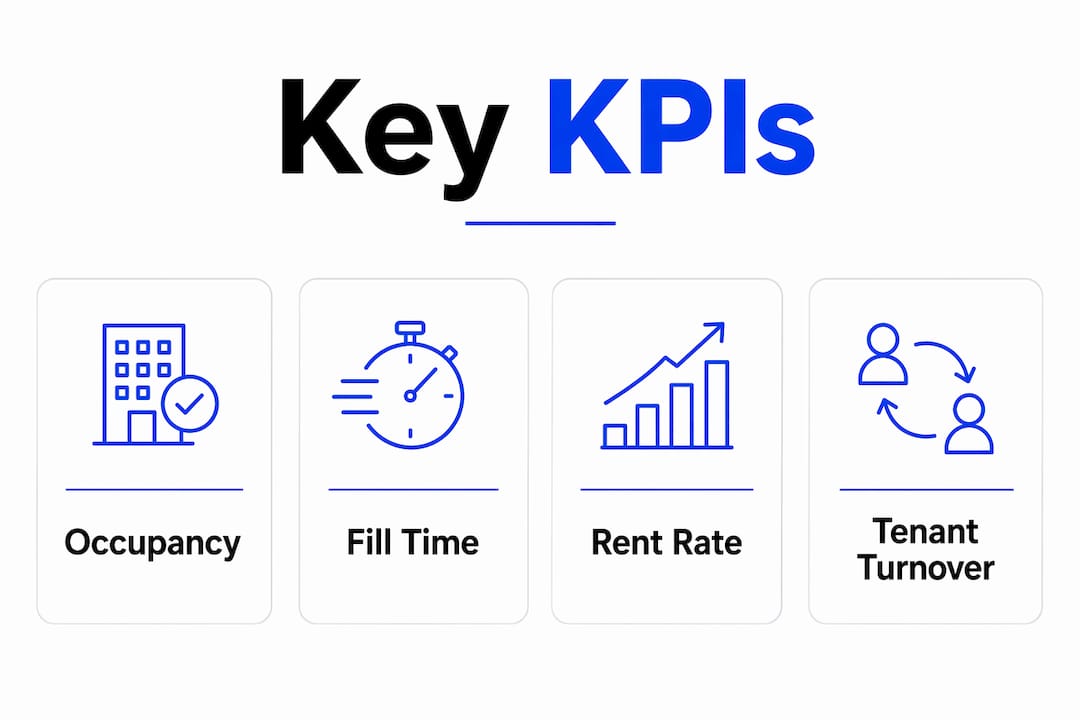
The four metrics that matter most are occupancy stability, time to fill vacancies, rent collection rate, and tenant turnover rate. Each one tells you something different about how a manager operates.
KPI | What it measures | What to ask for |
Occupancy stability | Percentage of units occupied over 12 months | Portfolio-wide average, not just your property type |
Time to fill vacancies | Days from vacancy notice to new lease signed | Average across their full portfolio |
Rent collection rate | Percentage of rent collected on time each month | Monthly data for the past 12 months |
Tenant turnover rate | How often tenants leave before lease end | Compared to local market average |
Beyond these four, maintenance SLA response times and documented ticket resolution processes are critical. Effective managers provide anonymized maintenance tickets that show categorization, response timelines, and resolution notes. If a manager cannot produce this data, they either do not track it or do not want you to see it. Both outcomes are problems.
Watch for these red flags in the data conversation:
Inconsistent numbers across different conversations with the same company
Refusal to share portfolio-level vacancy rates
Opaque fee structures or inability to explain security deposit trust account policies
Missing or unavailable references from current clients
The cost-effective management checklist at 2ndstreetpropertymanagement outlines how to apply these metrics in a structured evaluation, which is worth reviewing before your first candidate interview.
How to interview and select your property manager step by step
A structured selection process protects you from making a decision based on personality rather than performance. Follow this sequence before signing any contract.
Build your checklist before the first call. Document the required credentials, insurance types, KPIs you will request, and the process questions you need answered. Going in without a checklist means you will forget something and fill the gap with gut feeling.
Conduct a structured interview with specific scenarios. Ask how they handled their last eviction, how they communicate with owners during a maintenance emergency, and what their process is when a tenant pays late for the first time. Specific scenarios produce specific answers. Vague questions produce marketing responses.
Review the contract and fee structure line by line. Look for setup fees, lease renewal fees, vacancy fees, and early termination clauses. Companies that hide fees or cannot explain their trust account policies are not worth the risk, regardless of how competitive their management percentage looks.
Check references beyond the company-provided list. Search Google, Yelp, and the Better Business Bureau for reviews the company did not select for you. Pay attention to patterns in negative reviews, not individual complaints.
Set 90-day performance review milestones post-hire. A formal 90-day review evaluates vacancy fill speed, financial statement clarity, and maintenance issue resolution. If the manager cannot meet agreed benchmarks in the first quarter, you have grounds to renegotiate or exit before deeper problems develop.
Pro Tip: Before comparing fee percentages across candidates, compare their reporting formats side by side. A manager charging 10% who sends you a clear monthly statement with categorized expenses gives you more value than one charging 8% whose reports require a follow-up call to interpret.
For a broader framework on selecting the right management partner, the property management tips for investors resource from 2ndstreetpropertymanagement covers the strategic side of this decision in detail.
Key takeaways
Hiring a reliable property manager requires verifying legal credentials, demanding operational transparency, and measuring performance through specific KPIs before and after signing any contract.
Point | Details |
Verify licensing first | Check your state regulator’s database directly; never rely on a photocopy or verbal confirmation. |
Demand insurance documentation | Require both general liability and E&O coverage before any further evaluation. |
Use the interview as a demo | Ask candidates to walk through a live maintenance ticket to reveal real operational consistency. |
Evaluate KPIs over testimonials | Request 12-month data on occupancy, rent collection, and turnover rather than curated reviews. |
Set 90-day review milestones | Formal post-hire benchmarks create accountability and give you an exit path if performance falls short. |
What I’ve learned about vetting property managers the hard way
Most landlords spend more time comparing management fee percentages than they do verifying whether a manager has ever had a disciplinary action on their license. That is backwards. A 1% difference in monthly fees is noise compared to the cost of a manager who mishandles a security deposit, misses a Fair Housing violation, or lets a vacancy sit for 60 days because their marketing process is broken.
The single most revealing moment in any evaluation is when you ask a candidate to show you their maintenance workflow in real time. Managers who have nothing to hide pull it up immediately. Managers who deflect, describe it verbally instead of showing it, or promise to send it later are telling you something important about how they will operate when you are not watching.
I have also seen owners skip the reference check because the interview went well and the company had strong online reviews. That is a mistake. Company-selected testimonials and curated Google reviews reflect the best-case experience. References from current clients, especially those managing similar property types in your market, give you the unfiltered version.
The owners who get the best outcomes from property management are not the ones who found the cheapest option or the most polished pitch. They are the ones who treated the selection process like a hiring decision for a key employee, because that is exactly what it is.
— Main
How 2ndstreetpropertymanagement helps investors find the right fit
2ndstreetpropertymanagement is built by investors for investors, which means the vetting process described in this article is already embedded in how the company operates. Every manager in the network carries verified licensing and current insurance documentation. Owners receive structured financial reports, documented maintenance workflows, and KPI tracking from day one. You do not have to build the evaluation framework from scratch or hope a candidate is being straight with you.
If you are ready to move from research to action, explore the full service offerings at 2ndstreetpropertymanagement and request a consultation. The team works directly with rental property owners to match them with management solutions that fit their portfolio size, market, and performance goals.
FAQ
What credentials should I verify before hiring a property manager?
Verify a current, active state real estate license and request proof of both general liability and errors and omissions insurance. Also check for any disciplinary actions through your state’s regulatory database.
How do I know if a property manager is being transparent about fees?
A transparent manager provides a written fee schedule covering management percentage, lease renewal fees, vacancy fees, and maintenance markups. Companies that cannot explain their security deposit trust account policies are a financial and legal risk.
What KPIs should I ask a property manager to provide?
Request 12-month data on occupancy rate, average days to fill vacancies, monthly rent collection rate, and tenant turnover rate. Effective managers also provide anonymized maintenance tickets showing response and resolution timelines.
How soon after hiring should I evaluate performance?
Set a formal 90-day review covering vacancy fill speed, financial report clarity, and maintenance resolution rates. This timeline gives the manager enough runway to demonstrate their process while keeping you in control of the relationship.
Is NARPM membership a reliable indicator of quality?
NARPM membership signals a commitment to industry standards and ongoing professional education, but it is not a substitute for verifying licensing, insurance, and actual performance data. Use it as one positive data point, not a deciding factor.
Recommended
Comments